
How patient is transported in Lifesavers ICU Air Ambulance_
Published on: March 22, 2026

ICU Air Ambulance?
Air ambulance transport is used when a patient requires rapid transfer over long distances while
continuing intensive medical care. Life Savers Ambulance Services operates ICU air
ambulances designed to function as flying intensive care units ensuring patient safety from
takeoff to hospital handover.
Case Overview
Patients who are critically ill or injured often cannot tolerate long road journeys. In such
situations doctors recommend medical air ambulance transport to reduce travel time and
maintain continuous ICU-level care. Life Savers ICU Air Ambulance is deployed only after
careful medical assessment and coordination with the treating and receiving hospitals.
Pre-Flight Medical Assessment
Before transport the patient is thoroughly evaluated by the medical team. This includes:
- Review of diagnosis and current clinical condition
- Stabilization of airway breathing and circulation
- Assessment of oxygen ventilator and medication requirements
- Planning for in-flight care and emergency preparedness
Only after the patient is deemed fit for air transfer the mission is initiated.
Patient Loading and Positioning
The patient is transferred from the hospital to the aircraft using a stretcher ambulance. Inside
the aircraft:
- The patient is securely positioned on a medical stretcher
- All movements are minimized to prevent instability
- Proper immobilization is ensured if trauma is involved
The setup is done carefully to allow easy access to the patient throughout the flight.
ICU Medical Setup Inside the Aircraft
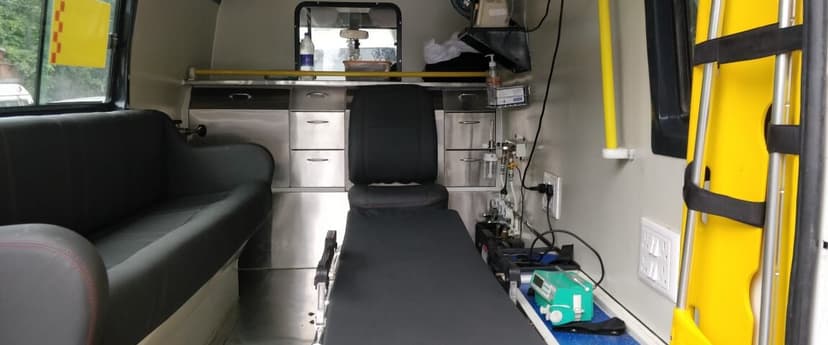
The Life Savers ICU Air Ambulance is equipped with advanced life support systems including:
- ICU ventilator for respiratory support
- Continuous cardiac and vital parameter monitoring
- Oxygen supply with adequate backup
- Infusion pumps for medicines and fluids
- Emergency airway and resuscitation equipment
The aircraft environment is managed to maintain oxygenation and patient comfort.
Medical Supervision During Flight
A trained medical team remains with the patient throughout the journey. Their role includes:
- Continuous monitoring of vital signs
- Managing ventilator settings and oxygen levels
- Administering medications as required
- Handling any medical emergencies during flight
Despite altitude and cabin pressure changes ICU-level care is maintained at all times.
Landing and Hospital Handover
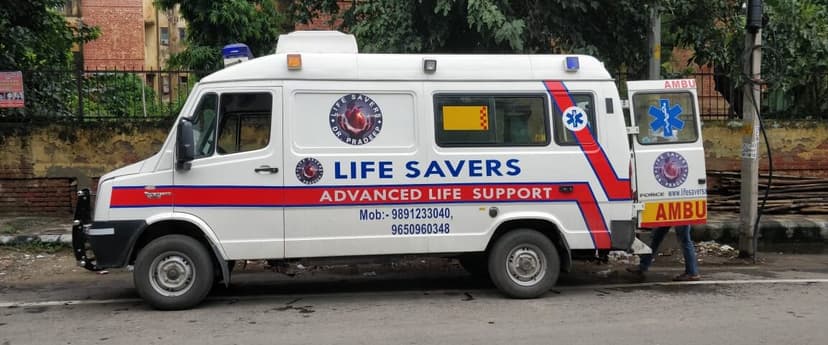
After landing the patient is shifted into a waiting ICU ambulance and transported to the receiving
hospital. A detailed clinical handover is provided including:
- Patient condition during flight
- Treatments and interventions given
- Current ventilator and medication status
This ensures seamless continuation of care at the destination hospital.
Clinical Perspective
Air ambulance transport is not just fast travel. It is about maintaining critical care without
interruption while minimizing transfer time. With proper planning specialized equipment and
experienced professionals even the most fragile patients can be safely transported.
Through every mission Life Savers Ambulance Services continues to serve as true Life
Savers, delivering ICU-level air medical transport and ensuring critically ill patients reach
advanced care facilities safely.
Need Emergency Ambulance?
Life Savers Ambulance operates 24x7 across India — air, rail & road.
Call 24x7: +91-9310864489